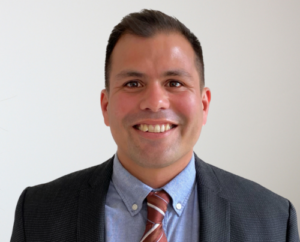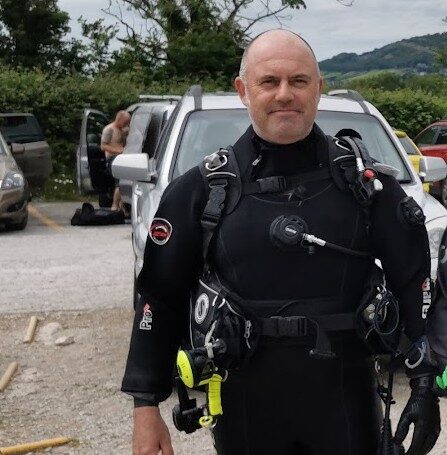
PC Scott Munday joined our National Graduate Programme in March 2026. Now aged 52, he shares why it’s never too late to pursue a new ambition and how the skills he developed throughout his working life have helped prepare him for a career in policing.
At 52, I’m at the start of a completely new career in policing. But getting here has involved quite a few career changes, and a lot of experiences that I never expected would eventually help me as a police officer.
I lived overseas for 16 years, working as a dive instructor, a marine engineer and a car salesman, before returning to the UK and becoming a trainee neighbourhood police officer.
Having previously lived and worked in Mexico, Zanzibar, the Caribbean, America and Germany, I’ve found that I can find something to talk about with almost anyone. That ability to build a rapport with people has been really useful in policing, particularly when dealing with people who may be stressed, upset or in difficult circumstances.
My first major career change came in 2002, when I left my job as a process operator at Immingham Dock, sold my house and moved to Ford Lauderdale, Florida, to qualify as a dive professional. The programme came with an employment guarantee, which convinced me to take the leap. I eventually qualified as a Master Scuba Diver Trainer.
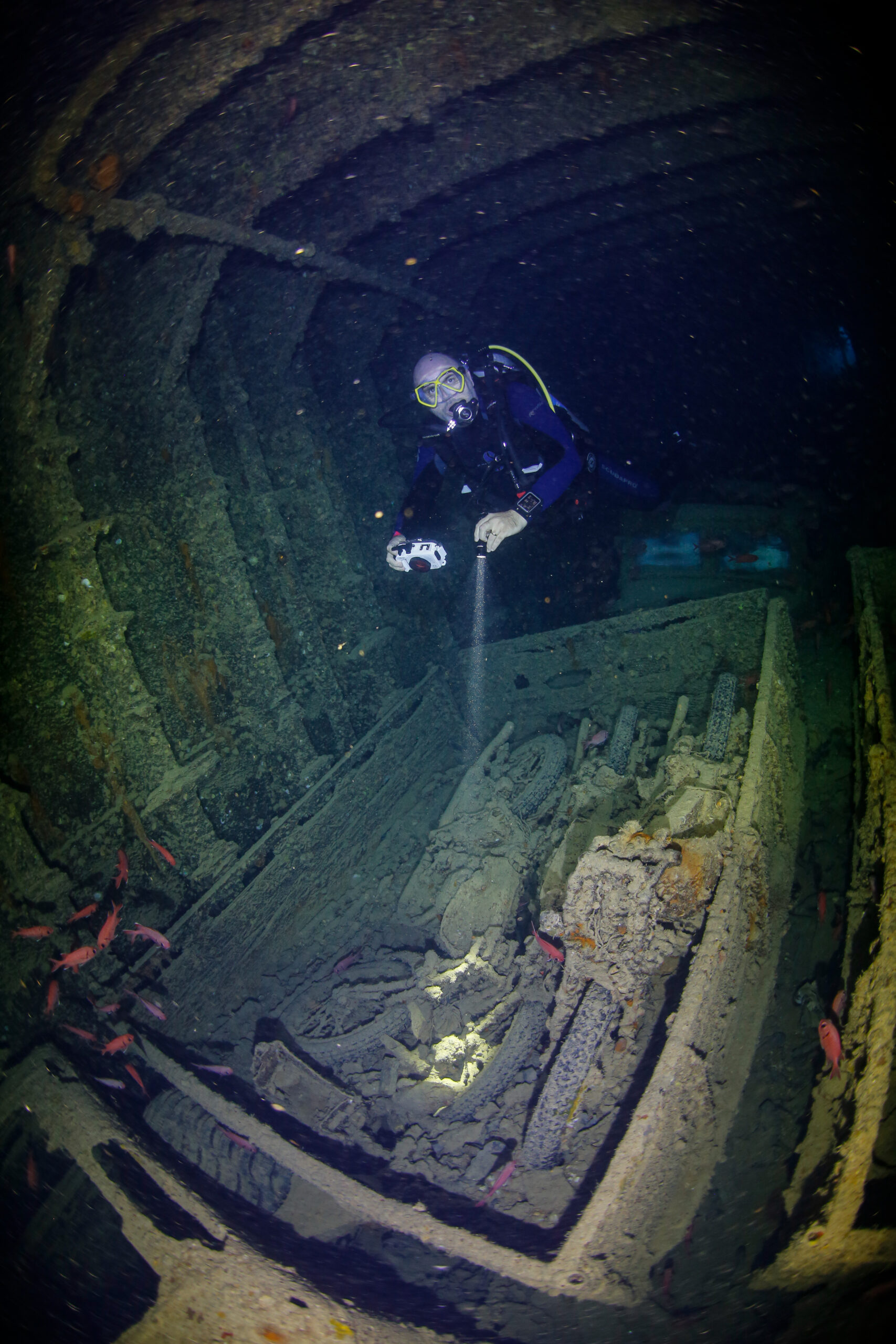
Diving professionally was an incredible experience. I saw some amazing places, worked with some great people and trained some individuals who had never had their head underwater before. I also got to train children, which I particularly enjoyed.
One of my favourite underwater encounters was a pygmy seahorse I saw off Peter Island in the British Virgin Islands. It was camouflaged green, with amber eyes, and was no bigger than my thumb. Despite having done thousands of dives, it’s still the only seahorse I’ve ever seen – so it remains pretty special.
But diving was hard work too. I could find myself doing five dives a day and, when I was on liveaboards, my days could be up to 20 hours long. I was the first person up in the morning to start the boat and, when we got to the mooring in the evening, I was the one going down the mooring line in the pitch black to make sure the chain was secure.
The physically demanding nature of the job, combined with the long hours and the need for total focus and discipline, taught me the importance of reliability and resilience. Looking back, those are skills I now recognise as being incredibly valuable in policing.
I later moved into marine engineering, combining my underwater operational experience with my background in heavy goods vehicle mechanics. I did that for about three years and enjoyed the independence of working on boats, setting my own schedule and taking responsibility for a highly specialised job.
Then life took another turn. I met a woman and moved to America to be with her and, while living in Texas, began selling cars for Mazda and Ford.
After that relationship ended, I got a job in Germany, where I spent almost nine years selling Harley Davidsons and tax-free used cars to American airman.
In 2018, I returned to Grimsby, Lincolnshire, with my wife and our two children, who are now aged 10 and 12. I undertook a degree in marine biology and had a number of jobs, including as a retention manager for BMW and as a lifeguard and swim teacher, before progressing to duty manager.
But eventually I reached a point where I couldn’t see myself doing the same role for the next 16-17 years. I wanted a new challenge and began looking at what else I could do.
That’s when I decided to apply to Police Now, which offers the only national graduate entry route into policing. Having already had several careers, I liked the idea of being able to use the experience I’d built up over the years while developing a completely new set of skills.
I was pleased to be able to use my degree and am now partway through their two-year programme. Following two months of intensive training, in June I arrived at Humberside Police, where I’ve been getting stuck in ever since.
My previous experience of shift work has made the transition into policing a little smoother, while the different jobs I’ve had have taught me how to work with all sorts of people, adapt to new environments and remain focused when things don’t go to plan.
I’ve also found that the perspective you gain from having worked in different industries and countries can be useful. I know what it’s like to be the new person, to learn from others and to work alongside people with very different experiences to my own. I’m still learning a huge amount, but I’m able to draw on lessons I’ve picked up throughout my working life.
For me, one of the most important of those lessons is that everyone deserves to be treated with respect, regardless of their circumstances. That’s something I’ve carried with me through every job I’ve had, and it’s something I want to bring to policing too.
For the first time in a long time, I’m genuinely excited about my future. Part of the appeal of policing is the progression that’s possible if I want to push myself, but it’s also the variety of jobs available. Maybe I’ll move upwards, perhaps I’ll move sideways, but the opportunities are there – and that’s really exciting.
I never expected that, after a career working underwater, in engineering, sales and a whole range of other roles, I’d find myself starting again at 52 as a police officer.